Tasi o le (Sese) Aoaoga Faavae o loo aoao mai i le tele o ekalesia, o le aʻoaʻoga o saisai i le le fiafia. This doctrine of ‘binding and loosing’ is already discussed in the blogpost ‘O le a le uiga o le mataʻaga a Iesu e faia ai?''. Ae peitai, a part of the doctrine of binding and loosing is not discussed and that’s the part of binding the strong man before spoiling his goods. It is taught, that you first have to find out, who the strong man is in a person’s life and when you’ve found out, through means of prayer, anapogi and the leading of the Holy Spirit, you must bind the strong man and then you can spoil his goods by setting the person free from demonic powers. But where do we read about this doctrine in the Bible that you have to bind the strong man? Where did Jesus teach His disciples about the hierarchical levels of demons and the levels of demonic power? Who were the strong demons and who were the weak demons? Where do we read that before Jesus sent His disciples to preach the gospel, they first had to pray and fast before they could go and enter a house? Where do we read anything about the disciples fasting in relation to cast out demons? And where do we read about the doctrine of binding the strong man, in the acts and lives of the apostles? Where did they bind the strong man? But if binding the strong man is not part of the gospel, what was Jesus referring to when Jesus spoke about binding the strong man and spoiling his goods? What does the Bible say about binding the strong man? Do you have to bind the strong man or has Jesus already bound the strong man?
God had given the enemy in the hands of His people
For the Lord hath driven out from before you great nations and strong: but as for you, no man hath been able to stand before you unto this day. One man of you shall chase a thousand: for the Lord your God, he it is that fighteth for you, as he hath promised you. Take good heed therefore unto yourselves, that ye love the Lord your God. Else if ye do in any wise go back, and cleave unto the remnant of these nations, even these that remain among you, and shall make marriages with them, and go in unto them, and they to you: ‘Ia e iloa ma le mautinoa e lē toe tulia e le ALI‘I lo ‘outou Atua se tasi o ia nu‘u i o ‘outou luma; but they shall be snares and traps unto you, ma sasa i ou itu, ma mea tuitui i o outou mata, se‘ia fano ‘outou ai lenei nu‘u lelei ‘ua foa‘iina mai e le ALI‘I lo ‘outou Atua ‘iā te ‘outou. Ma, faauta, this day I am going the way of all the earth: and ye know in all your hearts and in all your souls, that not one thing hath failed of all the good things which the Lord your God spake concerning you; all are come to pass unto you, and not one thing hath failed thereof. Therefore it shall come to pass, that as all good things are come upon you, which the Lord your God promised you; so shall the Lord bring upon you all evil things, until he have destroyed you from off this good land which the Lord your God hath given you. When ye have transgressed the covenant of the Lord your God, which he commanded you, and have gone and served other gods, and bowed yourselves to them; then shall the anger of the Lord be kindled against you, and ye shall perish quickly from off the good land which he hath given unto you (Iosua 23:9-16)
I le Feagaiga Tuai, we see the relationship between God and His people. God protected His people and fought for His people as long as His people walked in the way of God.
God’s people were familiar with God’s ways, since God had made these known to His people through the law (Faitau foi: ‘Le mea lilo o le tulafono'')
As long as the people stayed obedient to God and walked in His commandments, the people showed their love and fear for God and acknowledged Him as the one and only true living God in the heavens and earth.
Every time that God gave permission to His people to go to battle and they had to fight against the heathen nations, God had already given the heathen nations in the hands of His people; in the power of His people.
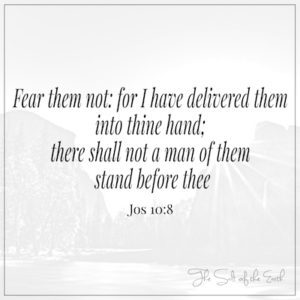
Because before the army of Israel went to battle in the natural realm, God had already bound and overcome the strong man in the spiritual realm. The only thing they had to do was to go, fight, gain the victory, spoil their goods and divide them among the people and/or take possession of their land (Gen 14:20, Ex 18:4-10, Nil 21:3-34, Jos 10:8-32; 11:8; 21:44; 24:11, Iuta 1:2-4, ma isi.).
The heathen nations saw their victories and therefore they had a great fear, not for the Israelites, but for the God of the Israelites. Because they knew that it was their God who had fought the fight and overcome the enemy.
The proof that God had overcome the enemy
How can we be certain that it was God, Who had bound the enemy and gained the victory, and that it was not due to the warrior skills and strength of His people? Aua o taimi uma, when the people of God became disobedient to Him and left Him and His commandments, Ma tuua e le Atua ona tagata, the people lost the battle. Although they went with the same amount of soldiers or sometimes, even more, they were defeated by their enemy, and instead of being victors, they became losers.
Therefore the victory over their enemies was not their own work, but it was God’s work.
No matter how powerful and mighty the armies of the Gentiles and their god(s) sa, they could not compete against God and His power.
The purpose of the coming of Jesus
The Spirit of the Lord is uponMme, because He hath anointed me to preach the gospel to the poor; Ua ia auina mai ia te au e faamalolo le loto nutimomoia, e talai le laveaiina i le tafeaga, ma toe maua le vaai i le tauaso, e seti i le saolotoga oi latou e momomo, Ina ia talaʻi le tausaga taliaina o le Aliʻi (Luka 4:18-19)
Iesu Keriso; o le Afioga soifua, came to the earth in the Name of God; the highest authority in heavens and on earth and brought the Kingdom of God on earth. Jesus brought the Kingdom by preaching the gospel, setting the captives free and eventually by saving mankind from the rulership of the devil and the kingdom of darkness and reconciling man back to God.
Jesus would bind the strong man, who had the power over fallen man, tasi ma mo tagata uma, by taking his armor (pule) and dividing his spoils.
Jesus walked in the Name of God and the power of the Holy Spirit
Ona tali atu lea o lesu, ua faapea atu ia te i latou, E moni, e moni, Ou te fai atu ia te outou, The Son can do nothing of himself, a o le mea ua Ia vaai i ai o faia e le Tama: mo mea uma na te faia, ua faapea foi le Atalii. Auā e alofa le Tamā i le Alo, ma faailoa atu ia te ia mea uma lava na te faia: and He will shew him greater works than these, ina ia outou ofo ai (Ioane 5:19-20)
Ua ou sau i le Suafa o Lo’u Tama, and ye receive Me not: afai e sau se tasi i lona lava igoa, him ye will receive (Ioane 5:43)
Ona fetalai atu lea o lesu ia te i latou, Pe a outou siitia i luga le Atalii o le tagata, ‘ona ‘outou iloa ai lea o a‘u lava o ia, ma ou te le faia lava se mea e tasi; a e faapei ona aoao mai e lo’u Tama ia te au, Ou te tautala atu i nei mea. O lo‘o ‘iā te a‘u fo‘i o lē na ‘auina mai a‘u: e lei tuua na o au e le Tama; for I do always those things that please him (ohJn 8:28-29)
‘Ona toe fo‘i atu ai lea o Iesu i le mana o le Agaga i Kalilaia (Luka 4:14)
Hereafter shall the Son of man sit on the right hand of the power of God (Luka 22:69)
Jesus was born of the Seed of God and consisted of a spirit, agaga ma le tino. His spirit was not dead, like fallen man, but alive and connected with His Father
Aua na ou alu ifo mai le lagi, aua le faia o loʻu lava loto, Ae o le finagalo o ia na auina mai au (Ioane 6:38)
Jesus walked by faith in obedience to His Father after His commandments, which represented His will.

As long as Jesus relied on His Father and walked and did the works in His authority and the power of the Holy Spirit, He walked after the Spirit and He stood above the ruler of the world; o le tiapolo ma lona malo.
The devil acknowledged His authority and power and therefore the devil tried everything to tempt Jesus to sin, just like he did with Adam.
Because the devil knew, that if Jesus would disobey the will of God and instead listen and obey the flesh, Jesus would walk after the flesh and would come under the power (pule) o le tiapolo.
But Jesus was not focused on the things of this world, but on the things of the Kingdom of God. Jesus didn’t listen to- and obey the lusts and desires of the flesh, but Jesus listened to the Spirit and obeyed the words of God.
Jesus didn’t rely on His flesh and didn’t do the works out of His flesh. Jesus wasn’t led by His carnal senses and therefore He didn’t rely on what He saw, faalogoina, ma lagona, but He trusted His Father and was led by what the Holy Spirit and the Father revealed to Him and told Him (Isaia 11:1-5).
Jesus spend much time in prayer and listened to His Father and stayed loyal to the words and instructions of His Father. Therefore Jesus was not intimidated by the people and the circumstances and was not tempted to sin, but Jesus stayed faithful to the will of HIs Father.
Jesus spoke the words of His Father and did the works in His power
E mafai ona ou faia se mea ia te oe lava: pei ona ou faalogo, Ou te Faamasino: ma o laʻu faʻamasinoga e naʻo; Aua ou te sailia le tele o lou finagalo, Ae o le loto o le Tama na auina mai ia te au (Ioane 5:30)
If I do not the works of My Father, believe Me not. But if I do, though ye believe not Me, believe the works: that ye may know, and believe, that the Father is in Me, and I in Him (Ioane 10:37-38)
Tou te talitonu e te le o le tama, ma le Tama ia te Au? O upu ou te tautala atu ai ia te outou Ou te le tautala fua na o Aʼu lava: Ae o le Tama e afio mai ia te au, Na te faia galuega. Believe Me that I am in the Father, ma le Tama ia te Au: or else believe Me for the very works’ lea (Ioane 14:10-11)
Jesus didn’t belong to the kingdom of this world and therefore Jesus didn’t speak the words of the world and didn’t do the works of the world. Nai lo lena, Jesus spoke the words of God and relied on Him and did all the works of the Kingdom of God in God’s authority and in His power.
Na fetalai Iesu, what His Father said and did what He had seen His Father do (Faitau foi: ‘Did you know… The feeding of the multitudes‘)
O latou uma e mafai ona tasi; pei o oe, Tama, faatufugaga i totonu ia te au, o au foi ia te oe, ina ia tasi foi i latou ia te i tatou: ina ia talitonu le lalolagi ua e auina mai au. And the glory which thou gavest me I have given them; ina ia tasi latou, e pei lava ona tasi i tatou: I totonu o i latou, ma o oe i totonu ia te au, ina ia mafai ona faia atoatoa i le tasi; ina ia iloa foi e le lalolagi ua e auina mai au, Ma na e alofa ia i latou, e pei ona e alofa mai ia te au (Ioane 17:21-23)
God lived in Jesus and Jesus lived in the Father. Jesus trusted and obeyed His Father and walked after His will. His Father protected Him, provided His needs and listened to Him, and answered Him.
His Father gave Him everything He asked for and what He needed to represent, tala'i, and bring the Kingdom of God to the people and fulfill His task on earth.
O lena upu, Ou te fai atu, ua outou iloa, ‘ua fa‘asalalauina i Iutaia uma lava, ma amata mai Kalilaia, ina ua mavae le papatisoga na talaiina e Ioane; Le ala na faauuina ai e le Atua Iesu le Nasareta i le Agaga Paia ma le mana: o lē na femaliuai ma agalelei, ma fa‘amālōlōina i ē uma ‘ua fa‘asauāina e le tiapolo; auā sa ‘iā te ia le Atua (Galuega 10:37-38)
Ma o lea, Jesus walked in the Kingdom of God on earth and reigned over the devil and his kingdom. Jesus called the things which were not as though they were and brought the Kingdom to God’s people by preaching the gospel, casting out demons and healing the sick.
Just like in the Old Testament God had overcome the enemy and had given the enemy into the hands of His people, God also had overcome the strong man (le fili); He had bind the strong man and had given him in the hands of Jesus; i Lona mana.
Raising Lazarus from the death
We read about this in the Book of John when Lazarus was raised from the dead. Before Jesus arrived at Lazarus’ grave, God had already given Jesus Christ the victory over death. Because when Jesus arrived at the grave, where Lazarus had laid for four days and He commanded Martha to take away the stone, Jesus lifted up His eyes, ma fai mai, “Father, I thank Thee that Thou hast heard Me. And I knew that Thou hearest Me always: but because of the people which stand by I said it, that they may believe that Thou hast sent Me”.
Then Jesus cried with a loud voice, “Lazarus, come forth!”. And death obeyed the words of Jesus, which He spoke in the authority of His Father and gave Lazarus back. What took place in the spiritual realm became visible in the natural realm, when Lazarus walked out of the grave (Ioane 11:1-44)
Jesus delegated the authority of the Kingdom of God to His disciples
Then He called His twelve disciples together, and gave them power and authority over all devils, and to cure diseases. And he sent them to preach the kingdom of God, ma faamalolo i e mamai (Luka 9:1-2, Mataio 10:1, Mareko 3:14-15; 6:7)
Faauta, Ou te avatua ia te oe le mana e alu ai i luga o gata ma scorpaons, ma luga o le mana uma o le fili: ma e leai se mea e afaina ai outou (Luka 10:19)
After Jesus had spent time with His disciples, Jesus called His twelve disciples and gave them power (pule) over unclean spirits and instructed them to do the same as Jesus did, namely to preach and bring the gospel of the Kingdom of God to God’s people.
Since they knew Jesus personally and had spent time with Jesus and saw His works, they knew exactly what His words meant and what they had to do.
Jesus didn’t teach them about the types of demons and the levels of demonic powers, nor did He gave them a step-by-step plan, which they had to follow to deliver a person from the oppression of the devil. He didn’t instruct His disciples to bind the strong man first.
Jesus didn’t command them either to pray and fast, before they went or that they first had to wait for a revelation of leading before they could deliver a person.
Leai, Jesus didn’t do that. Aua a leai, le pule, which Jesus had given His disciples would be powerless and of no effect. Because they would have relied on their flesh and would have done the works in the power of their flesh (Faitau foi: ‘A technical faith’).
But the authority, which Jesus had given them over unclean spirits and the faith of the disciples in Jesus and the authority which He had given to them, was sufficient to fulfill the commandment of Jesus and do the works of the Kingdom.
And so the disciples, who were not yet born again, but still belonged to the generation of the old creation, went in obedience in the power (pule) a le Atua.
By their faith in Jesus Christ and the authority, which He had given them, the disciples brought the Kingdom of God to those, who belonged to God’s people and they did the same works as their Lord and Master Jesus Christ.
Jesus was accused of casting out devils in the name of Beelzebub
But if I with the finger of God cast out devils, no doubt the kingdom of God is come upon you. When a strong man armed keepeth his palace, his goods are in peace: But when a stronger than he shall come upon him, and overcome him, he taketh from him all his armour wherein he trusted, and divideth his spoils. He that is not with Me is against Me: and he that gathereth not with Me scattereth (Luka 11:20-23)
But if I cast out devils by the Spirit of God, then the kingdom of God is come unto you. Or else how can one enter into a strong man’s house, ma faoa ana oloa, except he first bind the strong man? ona ia vetea ai lea o lona fale. He that is not with me is against Me; and he that gathereth not with Me scattereth abroad (Mataio 12:28-30)
And if a house be divided against itself, that house cannot stand. And if Satan rise up against himself, and be divided, he cannot stand, but hath an end. E leai se tagata e mafai ona ulu atu i le fale o se tagata malosi, ma faoa ana oloa, vagana ai na te muai fusifusia le tagata malosi; ona ia vetea ai lea o lona fale (Mareko 3:25-27)
The people were amazed by the works of Jesus. But because they were not familiar with the Kingdom of God, they didn’t recognize Jesus; le Afioga a le Atua, ma le Malo o le Atua, and therefore some of them accused Jesus of casting out devils in the name of Beelzebub.
But Jesus told them, that every kingdom or house that is divided against himself can’t stand. He asked them, if He cast out devils in the name of Beelzebub, in what name their sons were casting out devils.
Na fetalai Iesu, that if He had cast out devils with the finger of God (by the Spirit of God), the Kingdom of God had come unto them. Because when a strong man armed keeps his palace, his goods are in peace. This was also the case before Jesus came to the earth and the devil could continue his destructive work on earth without being disturbed, by a.o. misleading the leaders of the people with his lies, causing God’s people to be led astray.
But when a stronger than he shall come upon him and overcome him, he takes from him all his armor, wherein he trusted and divides his spoil. And that’s exactly what Jesus did, when He was sent by God to the earth and walked in the Name of God and in His power.
Because of the Name of God and His power, Jesus possessed a higher authority than the devil. Jesus exposed the lies of the devil by preaching the truth of God and taught the principles of the Kingdom of God to the people. Jesus delivered those, who belonged to God’s people from the power of the enemy by calling them to repentance, putting away sin, Tuli ese temoni, and by healing the sick.
And all those, who followed Jesus would gather with Him, just like the disciples, when they were sent by Jesus and had been given power over unclean spirits and they cast them out.
Jesus walked in the authority and power of God, but would eventually bind the strong man; le tiapolo, and take from him all his armor and disarm his power.
Jesus has bound the strong man
Ae o le fiafia o le Alii na amoina o ia; Ua ia tuuina ia te ia le faanoanoa: a e faia lona agaga o se taulaga mo le agasala, O le a ia vaai i lana fanau, E faafualoa e Ia ona aso, ma o le a manuia foi le finagalo o le Alii i Lona aao. O le a ia vaai i le lagona o lona agaga, Ma o le a faamalieina: by His knowledge shall My righteous servant justify many; aua o le a ia tauaveina a latou amioletonu. O le mea lea o le a ou vaevaeina ai ia te ia se vaega ma le sili, na te vaevaeina foi le vete ma e malolosi; auā ua ia sasaa atu lona agaga i le oti: ma sa faitauina o ia ma tagata solitulafono; and he bare the sin of many, ma faia le fautua mo tagata solitulafono (Isaia 53:10-12)
Ma ua latou faoa malo ma pule, ‘ua ia fa‘aali atu ‘iā te i latou, manumalo ia i latou i totonu (Kolose 2:15)
Jesus accomplished God’s redemptive work for (pa'u) tamaloa, through His death and resurrection. Jesus had overcome the devil and had spoiled the principalities and powers of the kingdom of darkness and made a shew of them openly, manumalo ia i latou i totonu. Jesus rose from the dead with the ki of hell and of death.
And so by His work, Jesus had bind the strong man by disarming him from his power (pule).
Ua i ai i le Atua (le tumau) given His Kingship to His Son, until all His enemies are put under His feet (1 Corintians 15:25).
Iesu Pule, together with the sons of God and fight together against the spiritual powers, malo, and rulers of the kingdom of darkness.
Jesus has overcome and disarmed the principalities and powers and has given them into the hands of the sons of God.
O lea la, you don’t have to look and search for the strong man in someone’s life and then apply all kinds of worldly formulas, technics and methods to bind the strong man. What a prideful thing to do!
There is only One, Who has bound the strong man and has disarmed his armour and that’s Jesus Christ!
Only through faith in Him and in His Name; His authority it is possible to spoil the goods and plunder the kingdom of darkness by saving souls and setting the captives free.
Jesus look for those in whom He can show Himself strong
Ua tuʻuina mai ia te aʻu i le lagi aʻu. O lea ia outou o atu ai, ma aoao atu nuu uma, ma papatisoina i latou i le suafa o le Tamā, ma le Alo, ma le Agaga Paia: Ia outou aoao atu ia te i latou ia tausi i mea uma ua ou fai atu ai ia te outou: ma, faauta, Ou te faatasi ma oe i taimi uma, e oo lava i le gataaga o le lalolagi. Amene (Mataio 28:18-20)
Jesus still looks at those in whom He can reveal Himself and show Himself strong and manifest His authority and power.
Therefore He looks for people, who love Him and have faith in Him and lay down their own lives and submit themselves to Him and rely on Him and obey Him and walk in His authority and power.
Because Jesus can’t use someone, who loves himself and is full of himself and walks after the flesh and therefore relies on his own wisdom, malamalama, atamai, tomai, tomai, and position.
Such a person walks in pride and shall not listen to the Word, let alone submit to the Word and obey the Word. But such a person shall always know it better and shall go his own way. The person shall rely on his own insights, faaaliga, and experiences and shall do everything according to his own philosophy, fua fa'atatau, metotia, ma nekiki, which derive from the wisdom and knowledge of this world and are based upon experiences.
As the Father has sent Me, so shall I send you
At that day ye shall know that I am in My Father, and ye in Me, o a‘u fo‘i i totonu ‘iā te ‘outou. O lē e i ai ana poloaʻiga, ma tausia i latou, o ia lava e alofa mai ia te au: o lē alofa mai fo‘i ‘iā te a‘u, e alofaina o ia e lo‘u Tamā, ma o le a ou alofa ia te ia, ma o le a faaali atu aʻu lava ia te ia (Ioane 14: 20-21)
Ona toe fai atu lea o Iesu ia i latou, Ia manuia ia te oe: A o auina mai e loʻu tama ia te aʻu, e faapea lava ona ou auina atu ia te outou (Ioane 10:21)
As Jesus was sent by His Father and given His Name and His Holy Spirit to Jesus, to preach and bring the Kingdom of God on earth, so Jesus has sent those, who are born again in Him and has given His Name and the Holy Spirit, to preach and bring the Kingdom on earth on earth.
E pei o le atalii o le Atua, follower of Jesus Christ and citizen of the Kingdom of God, you must know His job and place and your job and place.
Many times believers mess up the tasks and places and don’t know exactly who is responsible for what. This is mainly because they lack knowledge of the Word.
Many want to take the position of Jesus Christ, but that’s impossible. He is God and He shall always remain God. And although you are seated in Him and Jesus has promised that you will do the same works as He has done and even greater works, aua na alu atu o Ia i le Tama, you will never be greater than Him (Ioane 14:12).
Jesus bound the strong man; He disarmed him from his power by His redemptive work at the cross. Therefore you don’t have to bind the strong man but you can enter His rest.
The responsibility of the Church is not to bind the strong man but to spoil his goods
The task of the Church is not to bind the strong man, but to spoil his goods and expose and destroy the works of darkness.
The Church is responsible for the souls of this age and no one else.
It is up to the Church; le au faatuatua, who are born again in Jesus Christ to plunder the kingdom of darkness and to set the captives free. Not by relying on all kinds of complicated (tagata) aoaoga faavae, fua fa'atatau, tekinolosi, ma auala, but by faith in the Name of Jesus Christ.
Only by living after Lona finagalo and by walking in the authority of Jesus Christ and the power of the Holy Spirit and preaching the truth of the gospel of Jesus Christ, Valaauina Tagata ia Salamo, casting out demons instead of ‘binding and loosing’, Faamaloloina Oe Mama, and remitting and retaining sins, they shall establish the Kingdom of God on earth.
Let therefore the Church wake up and take her position in Jesus Christ, and despite the resistance and persecution, do what Jesus has commanded to do and possess the land for King Jesus.
‘Ia fai ma masima o le lalolagi’