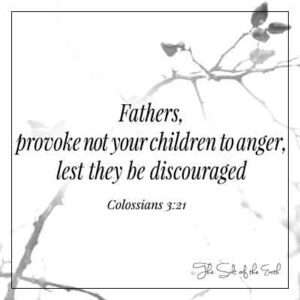
Raim-pianakaviana, Aza hadino ny zanakao, fandrao kivy izy ireo (Kolosiana 3:21)
Ao amin'ny Kolosiana 3:21, Nandidy ny raim-pianakaviana tany Kolosia i Paoly momba ny fifandraisany tamin'ny zanany. As Paul commanded the husbands in verse 19 to not be bitter but love their spouse with a self-denying love, he commanded the fathers to not provoke their children to anger.
Raim-pianakaviana, Aza hadino ny zanakao
In those days, the provocation of fathers towards their children already occurred. In all that time, nothing changed in the nature and behavior of (MARO) fathers regarding their interaction with their children.
ankehitriny, there are still many fathers who provoke their children to anger. Instead of fathers taking the responsibility that God gave them seriously, and from their parental authority and integrity, raising their children according to God’s Word and His will, many abuse their parental authority.
They abuse their parental authority and raise their children from a dominant position of power and provoke them to anger and many times take pleasure in that.
There are fathers, who think highly of themselves and are never satisfied with the behavior and performance of their child. They always mention what is lacking and what could have been done better, what a child is missing or does wrong, instead of fathers accepting their child.
Many father provoke their children to anger with humor. na izany aza, humor or no humor, provoking children to anger is not good.
As a father, you shouldn’t provoke your children to anger because it discourages and demotivates children and makes them angry. (Kolosiana 3:21, Efesiana 6:4).
Provoking your children to anger can lead to insecurity, fahakiviana, FAHORIANA, depression or aggression, derailment, fankahalana, and sometimes even murder.
Fathers should interact with their children in a loving way
As a father, you have the responsibility to interact with your children in a loving way and raise them in the fear of the Lord in the righteousness of the living and powerful Word of God with the values and standards from God’s Word (Ny Baiboly).
Correction, fampijaliana nahazoantsika, and rebuking children should be done in love and not in anger
As mentioned in the previous article, fampijaliana nahazoantsika, fanitsiana, and rebuking are also part of the parental duties regarding the raising and education of children. na izany aza, this should be done from God’s knowledge, FAHENDRENA, and love, which is poured out in the heart of the born-again believer, and the Spirit and not from the flesh, so that you react from your emotion (fahatsapana).
The Father has His children’s best interest at heart
Fathers should accept and respect their children and have the child’s best interest at heart. Just like our Father has His children’s best interest at heart. This doesn’t mean that God approves of everything and allows His children to do whatever they want and manota.
Children should submit to the Father and obey Him. Children shall do what He says, whereby they show Him that they love Him and trust Him.
Hoy ny Teny, Whom the Lord loves He chastens and scourges every son whom He receives.
Ary noho izany, a child who isn’t chastised by God is a bastard and not a son (Mihatra amin'ny lahy sy ny vavy izany.) and doesn’t belong to Him. (a.o. Ohabolana 3:11-12, Hebreo 12:5-11, Revelation 3:19).
ny (ARA-PANAHY) father always chastises his child, because a father knows that a child doesn’t mature and become steadfast by only spawning and patting on the back, but by parental knowledge, fahefana, fanitsiana, and chastisement a child is formed and becomes resilient. (Vakio koa: Izay tian’ny Tompo, Famaizana sy kapoka Izy).
Fathers ought to encourage their children
Children shouldn’t be eulogized by their fathers, but should be encouraged by their fathers.
If parents approve of everything and always eulogize their children, they strengthen their pride, izay hita ao amin'ny nofo. Vokatr'izany, children feel superior to others and put themselves above others, and become prideful. That’s not good, and that’s certainly not God’s will.
na izany aza, encouraging children during upbringing and growing up to adulthood is important. Ka izay, their faith, personality, and self-confidence are developed in a healthy way and they know who they are, how to communicate and build relationships with others, and function in the faith and society in a correct manner.
What is needed today are Godfearing children with backbone, who are raised in God’s Word and know the will of God and discern good and evil and dare to stand up for Jesus Christ in society and are not afraid to take a stand on God’s Word and do His will.
The dreams and expectations of fathers and mothers
Most fathers and mothers have their own dreams for their child and their own expectations of their child. In particular with regard to the child’s character, functioning and learning performance at school, eduction, job, and place in society.
For most parents, these dreams and expectations don’t come true, whereby they become disappointed in their child.
Some parents accept it and lay down their own desires and look at what’s best for their child. But other parents don’t do that and keep pushing their will upon their child. Vokatr'izany, their child is turned into something the child is not, with all the ensuing consequences.
Children know when they are not approved by their parents and, Toy ny hoe izany no izy., rejected by them, because they are not what they want them to be. This rejection of their parents becomes visible in their lives.
Fathers and mothers, look at your child through God’s eyes
As a father and also as a mother, you should look at your child through the eyes of God instead of the eyes of the world, and accept your child the way your child is. I’m not talking about accepting things that oppose God’s Word and His will. (Vakio koa: Ilay zaza very).
In the relationship between fathers and children, there is a continuous interaction. Just like in the relationship between a husband and a wife. One does this, the other does that. Atỳ, they form each other and together form a family where the Word and peace of God reigns.
‘Aoka ho fanasin’ny tany’