Ho Mattheu 7:7-8 le Luka 11:9-10 Jesu o boletse, Botsa, 'me e tla fuoa uena; batla, Le tla fumana; kokota, 'me e tla buleloa: for everyone that asks receives; 'me ea batlang fumana; le eena ea kokotang e tla buloa. Jesus promised that everyone who asks (prays) shall be given. That everyone who seeks shall find. And everyone who knocks shall be opened. But why do many Christians don’t get what they ask for and don’t find what they are looking for and keep standing in front of a closed door? What do Christians ask and seek, and at whose door are they knocking?
God is not a God, who keeps silent and hides Himself
I have not spoken in secret, in a dark place of the earth: I said not unto the seed of Jacob, Seek ye Me in vain: I the Lord speak righteousness, I declare things that are right (Esaia 45:19)
Come ye near unto Me, hear ye this; I have not spoken in secret from the beginning; from the time that it was, there am I: and now the Lord God, le Moya wa Hae, hath sent me. Ho itswe ke Jehova, Molopolli oa hao, Mohalaledi wa Iseraele; Ke nna Jehova, Modimo wa hao, ya o rutang ho rua molemo, which leads thee by the way that thou shouldest go (Esaia 48:16-17)

God is not a God, Who keeps silent and hides Himself. But God is only silent and hidden to those, who don’t seek His face.
God has not forsaken His children. He has not left His children desolate. But many of God’s children have forsaken the Lord and made themselves desolate.
God has revealed Himself and has given His Word and Holy Spirit. But in whom do His Word and His Holy Spirit live?
Who reads and studies the Bible and knows what is written in God’s Word? And who knows Jesus Christ and the will of God and do His will in his life?
Who spends time with the Father in prayer? And if someone prays, what does the person pray?
Not Thy will, but my will be done
Does the person set time apart and take the time to pray and pray from the Spirit according to the will of God? Or does the person pray quickly a short selfish prayer from his prideful and unrepented heart according to the will, ditakatso, and desires of his flesh?
Does the person only approach God to make his will known to Him and go over his wishlist and give God the commandment to execute his will? Because that’s what the prayer life of many Christians looks like.
Many Christians only approach God, when they need something from Him instead of approaching God because they love Him and they desire to spend time with Him, joalo ka Jesu, Who spent a lot of time with the Father in secret. Not to receive something from Him. But because Jesus loved His Father (Bala hape: Bophelo ba Thapelo ea Lekunutu ea molumeli).
The prayer life of Jesus
Bonang, Ke Moneile hoba Paki ho batho, Moetapele le Molaodi ho batho. Bonang, O tla bitsa setjhaba seo o sa se tsebeng, + ’me lichaba tse neng li sa u tsebe li tla mathela ho uena ka lebaka la Jehova Molimo oa hao, le bakeng sa Mohalaledi wa Iseraele; hobane O u tlotlisitse. Seek ye the Lord while he may be found, bitsa ho Eena A sa le haufi: Let the wicked forsake his way, le motho ea sa lokang mehopolo ea hae: mme a kgutlele ho Jehova, mme O tla mo hauhela; le ho Modimo wa rona, hobane O tla tšoarela haholo. Etsoe mehopolo ea Ka hase mehopolo ea lōna, le ditsela tsa lona ha se ditsela tsa Ka, Saith Morena. Etsoe joalokaha maholimo a phahame ho feta lefatše, kahoo litsela tsa ka li phahametse litsela tsa lōna, le mehopolo ya Ka ho fetisa mehopolo ya lona (Esaia 55:4-9)
Jesus was faithful and spent a lot of time with His Father. He sought God’s face continually. Jesus sought His Father in everything. Because of that Jesus knew the will, the thoughts, and the ways of His Father.
The prayers of Jesus didn’t revolve around Himself and His earthly life. But His prayers revolved around God and His Kingdom and doing His will
His whole life, Jesus lived in submission and obedience to the will of the Father. And fulfilled the will of God in His life.
Because this was the most important thing in Jesus’ life, and through His obedience, He spoke the words of the Father, a boloka litaelo tsa hae, doing the works and the will of the Father, Jesus was the reflection of God on earth. Jesus showed and manifested God’s holiness, ho loka ha Molimo, Matla a Molimo, and God’s love to the people and manifested God’s Kingdom on earth.
Was the will of Jesus always equal to the will of the Father?
They came to a place which was named Gethsemane: and he saith to His disciples, Sit ye here, while I shall pray. And He taketh with Him Peter and James and John, and began to be sore amazed, and to be very heavy; And saith unto them, My soul is exceeding sorrowful unto death: tarry ye here, and watch. And He went forward a little, and fell on the ground, and prayed that, ha ho ka etsahala, the hour might pass from Him. Mme a re, Abba, Ntate, all things are possible unto Thee; take away this cup from Me: nevertheless not what I will, but what Thou wilt (Tšoaea 14:32-36)
Jesus knew the purpose of His coming to earth. Jesus often spoke about His sufferings, dying, le tsoho bafung. He knew when this would take place. Jesus knew when He would be delivered into the hands of sinners. Because the Father had revealed this to His Son. Leha ho le joalo, Jesus asked the Father a peculiar question.

Before Jesus was betrayed and taken captive and tortured and crucified, Jesus went with His disciples to Gethsemane.
Jesus took Peter, James, and John with Him to pray and was sore amazed, and very heavy.
The soul of Jesus was exceeding sorrowful unto death. When Jesus fell on the ground, Jesus prayed that if it were possible the hour might pass from Him.
Jesu o boletse, Abba, Ntate, all things are possible unto Thee; take away this cup from Me: nevertheless not what I will, but what Thou wilt.
After one hour of prayer, Jesus stood up. He went to His disciples, who had fallen asleep. Because they were not able to watch and pray for one hour with Jesus. (Bala hape: Nama ha e khone ho rapela)
Instead of quitting after one hour of prayer and leaving the garden with His disciples, He returned. Jesus returned to the place, where He had kneeled and prayed before. Since Jesus was entangled in a spiritual battle that had not finished yet. (Bala hape: Ntoa serapeng).
“Abba, Ntate, all things are possible unto Thee; take away this cup from Me: nevertheless not what I will, but what Thou wilt”
Jesus prayed again the same question. He asked, that if it would be possible, the cup would be taken away from Him. Nevertheless not His will but the will of the Father be done.
During His prayer, an angel from heaven appeared unto Jesus. The angel strengthened Jesus, whereby Jesus received the answer to His question. Because it was the will of the Father for Jesus to drink the cup.
After the angel strengthened Jesus, Jesus was in agony and prayed more earnestly. Jesu’ sweat became, joalo ka ha ho ne ho le joalo, great drops of blood falling upon the ground. Jesus had a severe spiritual battle unto blood to fight. Empa qetellong, Jesus overcame the battle between the Spirit and the soul.
And after the crucifixion of the soul, Jesus arose and executed the will of His Father. (Mattheu 26:36-46, Tšoaea 14:32-42 le Luka 22:39-46 (Bala hape: thakhiso ya moya).
Not My will, empa thato ya Hao e etswe!
Jesus prayed persistently and spent hours in prayer to seek God’s face and His will. And the Father didn’t leave His question unanswered, but He answered the question of His Son. Leha ho le joalo, the answer of the Father was not according to the will of His Son. But the answer was according to the will of the Father.
Instead of rebelling against His Father and walking away and doing His own will and going His own way, Jesus submitted to the word and the will of the Father.
And in obedience to the will of the Father, Jesus began His way of suffering. The way that meant torture(s) and the death to Jesus. But it was the way that led to the redemption of (oele) humanity and the reconciliation of man with God.
Kopang, mme le tla fuwa, batlang, mme le tla fumana, kokotang, mme le tla bulelwa
A re ho bona, Which of you shall have a friend, and shall go unto him at midnight, mme le re ho yena, Friend, lend me three loaves; For a friend of mine in his journey is come to me, and I have nothing to set before him? And he from within shall answer and say, Trouble me not: the door is now shut, and my children are with me in bed; I cannot rise and give thee. Ke re ho lona, Though he will not rise and give him, because he is his friend, yet because of his importunity he will rise and give him as many as he needeth.
Mme ke re ho uena, Botsa, 'me e tla fuoa uena; batla, Le tla fumana; kokota, 'me e tla buleloa. For every one that asketh receiveth; and he that seeketh findeth; and to him that knocketh it shall be opened. If a son shall ask bread of any of you that is a father, na o tla mo fa lejoe? or if he ask a fish, will he for a fish give him a serpent? Or if he shall ask an egg, will he offer him a scorpion? Haeba le ka nako eo, ho ba bobe, Tseba Tsela ea ho Fa Limpho Tse Ntle ho Bana ba Hau: how much more shall your heavenly Father give the Holy Spirit to them that ask Him? (Luka 11:5-13)
Jesus didn’t pray short quick prayers. But Jesus prayed persistently. And Jesus made this principle of persistent prayer known to His disciples. He also made the nature and the will of the Father known to His disciples. Jesus taught His disciples that the Father always answers. The Father is always found. And the Father always opens the door to all those, who come to Him and seek His face and ask, batla, and knock persistently.
Ho Mattheu 7:7-11 le Luka 11:5-13, the asking (ho rapela), ho batla, and knocking were related to the receiving of good things, which come from above (James 1:18), Moea o Halalelang.
It was related to the things of the Kingdom of God and of Christ and the inheritance that believers have received in Christ and what they need to walk as sons of God (sena se sebetsa ho banna le basali) as the new creation on earth and to be witnesses of Jesus Christ and represent, preach and establish God’s Kingdom on earth.
The fulfillment of the promise of the Holy Spirit
Jesus had promised His disciples that the Father would give them the Holy Spirit. Before Jesus ascended to heaven, He gave His disciples the commandment to stay in Jerusalem and to wait for the promise of the Father (Oh. Johanne 14:15-26; 15:26-27, Liketso 1:4-8).
The disciples obeyed the commandment of Jesus and went to Jerusalem and waited in the upper room for the promise of the Father.
Ka kamoreng e kaholimo, the disciples prayed in one accord persistently. They asked, sought, and knocked, and due to their obedience to the words and commandments of Jesus and their determination and persistent prayer, they received the promise of the Father and they were all filled with the Holy Spirit. (Bala hape: U fumana moea o halalelang neng?).
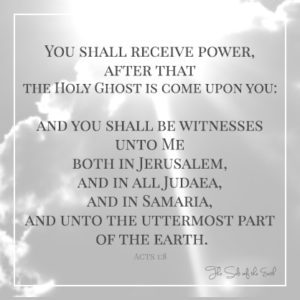
The disciples had received the Spirit of power, lerato, and a sound mind, whereby they were able to boldly preach the gospel of the crucified and risen Jesus Christ, Mora Modimo, and to call the people to repentance and destroy the works of darkness and establish the Kingdom of God on earth.
They had received the power of the Holy Spirit to be witnesses of Jesus Christ and to execute the commandment of Jesus and the work of God.
If anyone has not received the Holy Spirit and asks the Father for the Holy Spirit and prays, seeks, and knocks persistently, he or she shall receive the Holy Spirit. Jesus has given this promise to everyone, ya dumelang, and all His promises are true and still apply.
If someone has a lack of knowledge (or another lack) and asks God in faith, it shall be given to him or her. (Oh. James 1:5-8).
These three elements of persistent prayer (asking), ho batla, and knocking should be present in the lives of Christians. Just like Jesus prayed persistently, and sought God’s face. Jesus kept knocking until the door was opened and Jesus’ question was answered and He received what He sought.
You have not because you ask not
Where your heart goes out to, that’s what you want. And what you want, you shall ask (Rapela). If you love the world, your heart shall go out to the things of this world. You shall pray for the things of this world for yourself instead of the things of God.
Empa ha lerato la Modimo le dutse ho wena, mme o rata Modimo ka pelo ya hao yohle, pelo ya hao e tla elellwa Yena le dintho tsa Mmuso wa Modimo. O tla kopa dintho tsa Modimo, tse sa hlokeng wena feela, empa haholoholo ho ba bang; bakeng sa ho bolela evangeli le ’nete ea Lentsoe la Molimo, ho pholosa meea, kgolo le paballo ya Mmele wa Kreste le ho thea Mmuso wa Modimo lefatsheng.
Ke kahoo James a ngotseng, Haeba u se na eona, ke hobane ha o e kope. 'Me haeba u botsa, empa ha le eso ho e fumane, ke hobane o botsa hampe, hore le tle le e je ka ditakatso tsa lona.
Jesu o boletse, hore le se ke la tšoenyeha ka lintho tseo Balichaba ba li batlang. Kaha Ntate o tseba seo bana ba Hae ba se hlokang, even before they have asked God for it. And God shall provide because God is a Provider. (Oh. Mattheu 6:25-34).
But if you are still the old creation and are not spiritual but carnal and live like the Gentiles, who don’t belong to God but to the world, you shall want those things and ask those things, which the Gentiles want and are focused on, and you shall seek and desire them (James 4:1-5).
Ka mohlala, if you love money, you focus on money. You shall pray (ask) out of your love of money and greed for money and material things. But if you love Jesus, you focus on Jesus. You shall pray out of that love and pray for (lintho tsa) 'Muso.
Ka hona, the question is, Who or what do you love, what Is your focus and what do you ask?
What do you ask?
Bakeng sa moea o khopo oa takatso ea pelo ea hae, mme o itshetlehe ho chacheha, Morena A Bony o Khabela Mang. Ba lipelo li mpe, ka boikhohomoso ba sefahleho sa hae, e ke ke ea batla ho latela Molimo: Molimo ha a eo menahano eohle ea hae. Litsela tsa hae li lula li le thata; likahlolo tsa hao li hole haholo le pono ea hae: Ha e le lira tsohle tsa hae, oa ba hahola. O ile a re ka pelong ea hae, Nke ke ka sisinyeha: Hobane nke ke ka ba litsietsing.
Molomo oa hae o tletse ka ho rohaka le thetso le bosholu: Tlas'a leleme la hae ho fosahetse le lefeela. O lula libakeng tse mosa tsa metsana: libakeng tse sephiring Amolao a bolaea ba se nang molato: Mahlo a hae a qhibilihile khahlanong le mafutsana. O lula a leta ka lekunutu joaloka tau e neng: he lieth in wait to catch the poor: he doth catch the poor, Ha a mo etela ka letlooa la hae (Lipesaleme 10:3-9)
If there has been a change of heart through regeneration in Christ, there shall be a change of prayer.
Instead of selfish carnal prayers that focuses on the things on earth and on establishing the will, ditakatso, le litakatso tsa nama, believers pray selfless prayers from the Spirit that focus on Jesus and the will and the Kingdom of God.
Seek and you shall find
O fear the Lord, lona bahalaleli ba hae: Hobane ha ho na seo ba se batlang ho ba mo tšabang. The young lions do lack, and suffer hunger: but they that seek the Lord shall not want any good thing (Lipesaleme 34:9-10)
Your heart determines your life; what you speak, seo u se etsang, and how you live. The condition of your heart determines your focus and what you are looking for.

Ha Jesu a le ka ho wena, mme pelo ya hao e le ya Modimo, mme o rata Modimo ka pelo ya hao yohle, o tshaba Modimo, le tla batla Jehova, Modimo wa lona.
Hobane pelo ea hao e batla ho batla sefahleho sa Jehova. Ke takatso ya pelo ya hao.
U tla batla lintho tseo, e ka holimo, moo Kreste a dutseng letsohong le letona la Ntate.
Empa ha o eso tswalwe labobedi mme pelo ya hao e ntse e le ya lefatshe mme o ithata le lefatshe, le tla batla dintho tseo, tse lefatsheng. Le tla lakatsa tse tshwanang le tsa Baditjhaba, ba sa tsebeng Modimo mme e se ba Hae.
Ha o le ho Kreste mme Kreste a phela ka ho wena, o tla tsepamisa kelello linthong tse holimo. Le tla batla Jehova, mme le tla fumana, seo u se batlang. (Bala hape: U ka tseba joang haeba Kreste a ho uena?).
Konyang, mme le tla bulelwa
Boikutlo bo sa sireletsehang ba ho tela ha ho mohla bo entseng phaello. Empa tiisetso le boikemisetso li na le. Tumelo ha e tele empa tumelo e sebetsa ka ho tšepa Morena Jesu le Ntate. Tumelo e ikemiselitse ’me e tsoela pele ho kokota ho fihlela monyako o buloa.

Tumelo ena le boikemisetso bona hangata lia haella bophelong ba Bakreste. Hobane ntlha ea bohlokoa ka ho fetisisa e haella 'me ho joalo, ho tseba Modimo.
Haeba u tseba motho 'me u tseba moo motho a lulang teng. 'Me u kholisehile ka ho feletseng hore motho o teng lapeng. U ea monyako o nepahetseng ’me u ntse u kokota ho fihlela monyako o buloa.
Empa Bakreste ba bangata ha ba na bonnete hakaalo ka taba ea bona.
Ba belaela mme ba na le maikutlo a mabedi. Ba ipotsa hore na ebe Molimo o utloa lithapelo tsa bona. Ha re bue ka ho araba lithapelo tsa bona, haeba ba sa arajoe lithapelo tsa bona ka hare ho letsatsi kapa beke.
Bakreste ba bang ha ba tsebe hore na ba rapele mang. Ha ba tsebe hore na ba lokela ho ba monyako ofe. Ka hona, ba kokota ka tšohanyetso monyakong o mong le o mong oo ba tla o fumana, ka tshepo ya hore motho o tla bula monyako.
Hobaneng ha Bakreste ba sa fumane seo ba se rapellang?
Ha ba rapele ho tsoa ho Kreste, ka ntle ho Lentswe, ho tsoa tšenolong le thutong ea Moea o Halalelang. Empa ba rapela mantsoe a ithutileng, lithapelo tse ngotsoeng, le mekhoa ea thapelo ho tsoa ho moruti oa bona, baboleli, le libuka tsa Bokreste. 'Me kahoo ba rapela ho tsoa mehopolong ea bona ea nama le tumelo ea bona ho (ngotsoe) Thapelo(s) le mantsoe ao ba a buang le mekhoa eo ba e sebelisang. Ka mantsoe a mang, ba rapela ho tsoa tumelong ea bona matlotlong, ho e-na le ho rapela ho tsoa tumelong ea bona ho Molimo. (Bala hape: Tumelo ea Bohlale)
Ke kahoo Bakreste ba bangata ba sa botse (Rapela), batla, and knock persistently. Hobane ha ba rapelle ka kholiseho e felletseng ea tumelo ea bona ho Jesu Kreste le Molimo Ntate.
Jesu o ile a botsa potso eo, mohla A kgutlelang lefatsheng, hore na O fumana tumelo eo, e ikemiselitseng le e phehellang, le ho se tele. Tumelo eo Jesu le barutuoa ba Hae ba ileng ba kena ho eona. Tumelo eo Mokreste emong le emong; mora e mong le e mong wa Modimo (sena se sebetsa ho banna le basali) mme morutuwa wa Jesu Kreste o loketse ho kena. (Bala hape: Na ke tla fumana tumelo lefatsheng?)
Mokreste e mong le e mong o lokela ho rapela, batla, le kokota
Jesu o ne a tsamaea ka tumelo ho Molimo ’me o ne a ikemiselitse a bile a rapela a sa khaotse ’me ha aa ka a tela. Baapostola le badumedi ba kereke ya pele le bona ba ne ba tsamaya ka tumelo ho Modimo le ka tumelo Lebitsong la Jesu. Ba ne ba ikemiseditse mme ba rapela ba sa kgaotse mme ba se ke ba tela.
Joalo ka bona feela, badumedi bohle kajeno ba lokela ho tsamaya ka tumelo ho Modimo le ka tumelo Lebitsong la Jesu. Ba lokela ho ikemisetsa le ho phehella thapelong, le ho se tele.
U ka ba le boikemisetso le tiisetso ena ha feela u se u le sebōpuoa se secha 'me u tseba hore na Molimo le Moetsi oa hao ke Mang., Ea o lopolotseng lefifing, le Ea ahileng ka ho lona, ea le tataisang.
‘E be letsoai la lefatše’