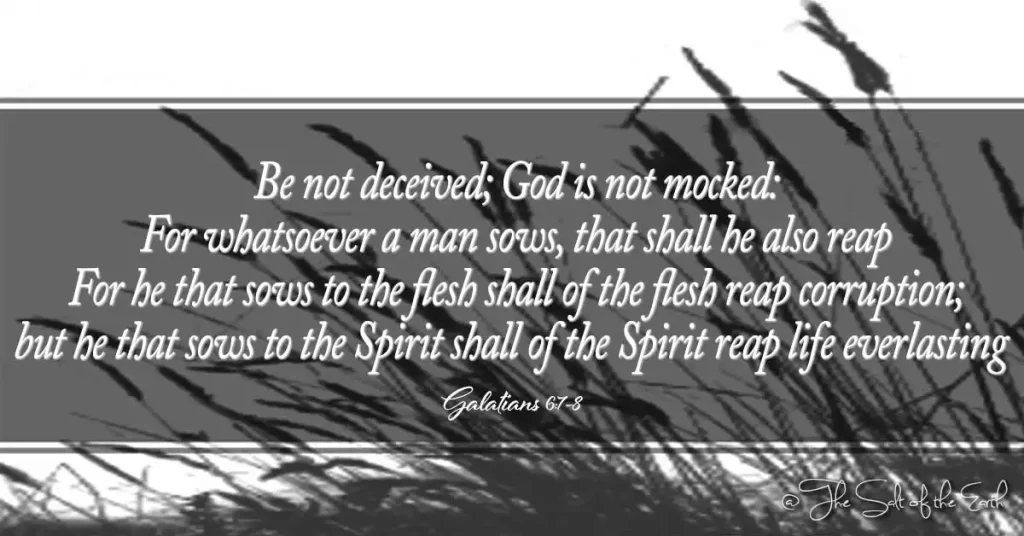
Mishi dhe Fryma janë diametralisht të kundërta me njëri-tjetrin. Mishi dëshiron kundër Frymës dhe Fryma dëshiron kundër mishit. The Bible says that the flesh and the Spirit don’t go together and will never go together. A person sows in the flesh or a person sows in the Spirit. What a person reaps is the result of what a person has sown in; the Spirit or the flesh. Because as is written in Galatians 6:7, what you sow you will reap. Let’s look at what the scriptures in the Bible say about sowing and reaping.
What is a carnal person?
A carnal person is carnally minded and walks after the flesh. A carnal person is led by the flesh (shqisat, ndjenjat, mendje mishore, etj.) and does the works of the flesh. These works of the flesh originate from the sinful nature of the flesh and oppose the will of God.
Sepse ata që janë sipas mishit mendojnë për gjërat e mishit; por ata që janë sipas Frymës janë gjërat e Frymës. Sepse të kesh mendje trupore është vdekje; por të kesh mendje shpirtërore është jetë dhe paqe. Sepse mendja trupore është armiqësi kundër Zotit: sepse nuk i nënshtrohet ligjit të Perëndisë, as në të vërtetë nuk mund të jetë. Pra, ata që janë në mish nuk mund t'i pëlqejnë Perëndisë (romakët 8:5-8)
The flesh won’t submit to God but rebel against God and disobey His commandments. Prandaj, the people who are the krijimi i vjetër and are in the flesh can’t please God.
What are the works of the flesh according to the scriptures in the Bible?
The works of the flesh originate from the evil nature of the flesh. The works of the flesh are mentioned in several places in the Bible and are:
- Tradhtia bashkëshortore (asexual relationship between a married person and a person who is not his or her spouse)
- kurvëria (kurvëria, sexual uncleanness including adultery, divorci, inçesti, nonmarital sexual relations, homoseksualiteti)
- papastërti (fizikisht apo moralisht: -papastërti, ritualisht i papastër)
- Dashuri e pamasë (duke vuajtur siç duhet, (i jashtëzakonshëm) dashuri, epsh)
- Dashuri e keqe (evil/wicked desire or lust)
- Lakmia (mashtrimi, zhvatje:-praktikat lakmuese, lakmia, duke pasur një mall për posedim)
- Zemërimi (pasion i dhunshëm, zemërimi, indinjatë, hakmarrje)
- Zemërimi (egërsi, indinjatë)
- Keqdashje (prapësi, e keqe, ligësi)
- Blasfemi (sharje (sidomos kundër Zotit), kangjella, të folurit keq)
- Filthy communication (bisedë e poshtër, duke sharë)
- Gënjeshtra (shqiptoni një të pavërtetë ose përpjekje për të mashtruar me anë të gënjeshtrës, në mënyrë të rreme, gënjeshtër)
- Largësia (e mbushur me ose duke shfaqur dëshirën seksuale)
- Idhujtaria (adhurimi i idhujve, lidhje ose përkushtim i pamatur ndaj diçkaje)
- Magjia (përdorimi i magjisë ose magjisë, përdorimi i magjive dhe thirrja e shpirtrave, komunikimi me djallin ose me një të njohur, një ndikim ose magjepsje e papërmbajtshme)
- Urrejtja (armiqësi ose armiqësi e paragjykuar, një arsye për kundërshtim, armiqësi)
- Varianca (me afinitet të pasigurt; një grindje, grindje, debat, grindje)
- Emulimet (zili, mendje e zjarrtë, indinjatë, xhelozia, zell)
- Grindje (një akt grindjeje, përpjekje ose grindje për epërsi)
- Rebelimet (ndarje, nxitje e rezistencës ose kryengritje kundër autoritetit të ligjshëm, rebelohet kundër autoritetit të një shteti)
- herezitë (sekti, belief or opinion contrary to orthodox religious doctrine (sidomos krishterimi), një besim ose mendim që nuk pajtohet me besimin ose opinionin zyrtar të një feje të caktuar)
- Zilirat (xhelozia, ndjenja e dëshirës për të pasur atë që ka dikush tjetër, Një ndjenjë e pakënaqësisë ose dëshirës së pakënaqur të ngjallur nga pasuritë e dikujt tjetër)
- Vrasjet (therje, për të vrarë, për të prishur ose shkatërruar, për të mposhtur një kundërshtar shumë keq)
- Dehja(dehje, gjendja e të qenit i dehur)
- Zbavitje (trazira, a carousel, enjoying oneself in a lively and noisy way, sidomos me pirjen dhe kërcimin)
Shall the people who do the works of the flesh inherit the Kingdom of God?
Nr, the people who do the works of the flesh shall not inherit the Kingdom of God. No matter what preachers say in the church, the Bible says that people who do the works of the flesh shall not inherit the Kingdom of God.
Tani veprat e mishit janë të dukshme, cilat janë këto; tradhtia bashkëshortore, kurvëria, papastërti, lakmi, idhujtaria, magjia, urrejtje, variancë, emulacionet, zemërimi, grindje, rebelimet, herezive, zili, vrasjet, dehje, zbavitje, dhe të tilla si: nga ato që ju them më parë, siç ju kam thënë edhe në të kaluarën, që ata që bëjnë gjëra të tilla nuk do të trashëgojnë mbretërinë e Perëndisë (Galatasve 5:19-21)
A nuk e dini se të padrejtët nuk do të trashëgojnë mbretërinë e Perëndisë? Mos u mashtroni: as kurvarët, as idhujtarët, as shkelësit e kurorës, as feminate, as abuzues të vetvetes me njerëzimin, As hajdutët, as lakmues, as pijanecët, as sharësit, as zhvatësit, do të trashëgojnë mbretërinë e Perëndisë (1 Korintasve 6:9-10).
If the people of the church (duke përfshirë udhëheqësit e kishës) do these works it proves that the church (Kuvendi i besimtarëve) is carnal.
It proves that the church doesn’t belong to God and His Kingdom and is not spiritual but belongs to the world (mbretëria e errësirës) and is carnal.
The church building and interior with the dynamic neon lighting effect may look beautiful and the music may sound wonderful and influence the visitors in such a manner that it creates a certain experience, and elevate the mood and evoke pleasant feelings and emotions, and cause goosebumps, but all these things don’t prove that the church is spiritual and that God’s Spirit is present.
Përkundrazi, it only proves that the church is carnal. Because the church relies upon natural resources (audiovisual technology) to create an atmosphere and to play on the senses, ndjenjat, and emotions of the visitors. But God is Spirit and not a feeling and an experience.
If people go to a concert or a club, their mood shall also be elevated by the dynamic neon light effects and music. The people shall also experience goosebumps, ndjenja të këndshme, dhe emocionet. Megjithatë, God and His Spirit are not present.
Do signs and wonders prove if someone is born again and spiritual?
Nr, signs and wonders don’t prove if someone is born again and spiritual. Supernatural signs and wonders can take place in a church, but they don’t prove the spirituality of the church. Especially if people live in sin and the church tolerates sin.
Signs and wonders can originate from the Spirit. But signs and wonders can also originate from the soul, which is controlled by the kingdom of darkness.
Ka shume njerez, who don’t know God and are not born again and therefore are unspiritual, but do (mbinatyrore) shenja dhe mrekulli. They do these signs and wonders from the flesh through natural means; natural technics, metodat, rituale, and natural elements and resources and through influence of evil spirits.
This means that you don’t have to be born again to walk in the supernatural.
Look at alternative healers, Eastern philosophers, okultistët, etj. And don’t forget the sorcerers in Egypt, who could do the same signs as God, në një masë të caktuar.
This proves that you don’t have to be born again to walk in the supernatural.
Many natural technics are adopted from witchcraft and other pagan religions and philosophies and applied in the church, whereby many churches created a mechanical faith and moved in the occult. They move into the occult thinking they are led by the Spirit of God.
The only difference between an occult church and a Spirit led church is their walk. In an occult church the works of the flesh are done and in a Spirit led church the works of righteousness are done.
The new creation walks after the Spirit and bears the fruit of the Spirit
The people who have become a new creation in Christ have the Spirit of God and are no longer servants of sin. This means that they shall no longer serve the sinful nature of the flesh and do the will, epshet, dhe dëshirat e mishit. Their flesh died in Christ and their spirit is raised from the dead. Therefore they are dead unto sin, but alive unto God.
Born again Christians have received the Spirit of God and walk after the Spirit and bear the fruit of the Spirit.
Prandaj tani nuk ka asnjë dënim për ata që janë në Krishtin Jezus, që nuk ecin sipas mishit, por pas Shpirtit. Për ligjin e Frymës së Jetës në Krishtin Jezus më ka bërë të lirë nga ligji i mëkatit dhe vdekjes. Për atë që ligji nuk mund ta bënte, në atë që ishte i dobët për shkak të mishit, Zoti duke dërguar djalin e tij në ngjashmërinë e mishit mëkatar, dhe për mëkatin, dënoi mëkatin në mish: që drejtësia e ligjit të përmbushet tek ne, që nuk ecin sipas mishit, por pas Shpirtit (romakët 8:1-4)
Por ju nuk jeni në mish, por në Frymë, nëse është kështu që Fryma e Perëndisë banon në ju. Tani nëse dikush nuk ka Frymën e Krishtit, ai nuk është i Tij. Dhe nëse Krishti është në ju, trupi është i vdekur për shkak të mëkatit; por Fryma është jetë për shkak të drejtësisë. Por nëse Fryma e Atij që e ringjalli Jezusin prej së vdekurish banon në ju, Ai që ringjalli Krishtin prej së vdekurish do të ringjallë edhe trupat tuaj të vdekshëm me anë të Frymës së Tij që banon në ju (romakët 8:9-11)
What is the fruit of the Spirit?
The fruit of the Spirit is mentioned in Galatians 5:22-23, the fruits are:
- Dashuria (Godly love and not worldly love)
- Joy
- Paqe
- shpirtgjerësi
- Gentleness
- Goodness
- Besimi (besnik)
- Butësia
- Temperance (vetëkontroll)
Ofcourse there are people, who are not born again and seem loving, i butë, shpirtgjerësi, zemërbutë, besnik, i gëzuar, and peaceful. But the difference between the people who are carnal and the people who are spiritual is, që populli, who are carnal are led by the flesh and not by the Spirit.
Kjo do të thotë, that as long as the circumstances and situations go according to their will and as long as the people treat them according to their will, then everything is fine. But as soon as something changes and the circumstances and situations don’t go according to their will or as planned and other people don’t do what they want or don’t do what they expect them to do, or if they experience resistance and persecution, then their behavior changes and a whole bunch of other characteristics appear.
But the fruit of the Spirit, which originate from the Spirit and the Godly nature of the new man is permanent. Fryti i Shpirtit is not dependent upon natural circumstances, situatave, surroundings, dhe njerëzit. The new man bears the fruit of the Spirit at all times.
What does it mean what you sow you will reap?
What you sow you will reap means, what you plant in the soil you will reap. If you plant in the flesh, do të korrni frytin e mishit (veprat e mishit) and if you plant in the Spirit you will reap the fruit of the Spirit. Let’s explain this a little more.
Prandaj, vëllezër, Ne jemi debitorë, Jo në mish, për të jetuar pas mishit. Sepse nëse jetoni sipas mishit, ju do të vdisni: por nëse ju me anë të Frymës i dëmtoni veprat e trupit, ju do të jetoni (romakët 8:12-13)
Christians who by faith and regeneration belong to Christ and have become a krijimi i ri are not led by the evil sinful nature, e cila është e pranishme në mish. They don’t do those things that oppose the will of God.
Christians listen to Jesus and Ndiqe ate and don’t listen to the flesh and the lusts and desires thereof. They don’t do the works of the flesh. That’s because they have crucified their flesh and its lusts and desires in Christ.
If you sow in the flesh you shall reap corruption
As long as you remain the old man and walk after the flesh, you’ll do the works of the flesh. You shall remain a slave of sin. You shall sow to your flesh and of the flesh reap corruption.
The old man walks after the flesh and shall not please God with his works, but shall grieve God.
If you sow in the Spirit you shall reap life everlasting
But if you Duaje Zotin and have become a new creation you’ll keep His commandments. You shall walk by faith after the Spirit in His will in obedience to the Word. You shall sow to the Spirit and bear the fruit of the Spirit and reap life everlasting.
Për të gjithë ata që udhëhiqen nga Fryma e Perëndisë, ata janë bij të Perëndisë. Sepse ju nuk e keni marrë përsëri frymën e skllavërisë; Por ju keni marrë frymën e birësimit, me anë të së cilës qajmë, Aba, Babai. Vetë Fryma dëshmon me frymën tonë, Se ne jemi bijtë e Zotit: Dhe nëse fëmijët, pastaj trashëgimtarë; trashëgimtarët e Zotit, dhe Heirs të përbashkët me Krishtin; nëse është kështu që ne vuajmë me Të, që ne mund të jemi gjithashtu të lavdëruar së bashku (romakët 8:14-17)
"Bëhu kripa e tokës"
Burimi: Përputhshmëria e Strong, Fjalori i Oksfordit, Fjalor Merriam-Webster